

SEO consulting services involve expert guidance to improve website visibility in search engines through technical audits, strategic planning, and ongoing optimization aligned to business goals. The global SEO services market was reported at $83.9 billion, while median SEO ROI was reported at 748%, though neither figure guarantees what an individual business will earn.
You may already be in the familiar middle ground: your website is live, someone has added keywords to a few pages, and a monthly report shows rankings that don't clearly connect to leads or sales. Meanwhile, search results are changing, AI-generated answers are taking up more attention, and your developer, writer, and marketing team each have a different opinion about what should happen next.
Good SEO consulting replaces scattered tasks with a decision system. It identifies the problems affecting visibility, ranks the opportunities by business value and effort, and gives the people responsible for implementation enough detail to act. The consultant isn't merely handing over a list of keywords. They're helping you decide what deserves time, what can wait, and how search visibility should support the rest of your business.
Why Generic SEO Advice Fails Your Business
A generic SEO checklist usually tells you to “use keywords,” “write quality content,” and “build links.” None of those suggestions is wrong. The problem is that they don't tell a small business whether its biggest obstacle is an indexation error, weak positioning, poor page experience, missing local signals, an unconvincing offer, or content aimed at the wrong search intent.

Advice is not the same as consulting
SEO consulting services combine diagnosis, strategic judgment, implementation guidance, and measurement. A consultant may review your technical setup, content, competitors, analytics, internal links, conversion paths, and search opportunities. The useful output isn't a pile of observations. It's a prioritized roadmap that explains:
- What to fix first: For example, resolving blocked pages or incorrect canonical signals may matter more than publishing another article.
- Who should act: Recommendations should become developer tickets, writer briefs, design changes, or marketing tasks.
- Why the work matters: Each priority should connect to visibility, qualified visits, conversions, brand demand, or a defensible market position.
- How to evaluate progress: Reporting should distinguish completed work from search movement and business outcomes.
That distinction matters because search engines must reliably crawl, render, and index a page before they can rank it. A technically elegant content plan can't compensate for a site that prevents important pages from being discovered or understood. The history of SEO consulting reflects that shift, from early search discovery through systems that evaluate structure, relevance, and authority.
Why cheap packages often disappoint
A low-cost package may deliver recurring activities, but recurring activity isn't automatically strategy. A provider might publish pages without checking whether the topics fit your customers, report rankings without tracking enquiries, or recommend link tactics that create avoidable risk.
Practical rule: Pay for clearer decisions, not a longer task list.
Google defines spam as techniques intended to deceive users or manipulate search systems into ranking content highly. That makes transparency important. A responsible consultant should be able to explain the proposed tactic, its likely trade-offs, the people needed to implement it, and the metric that would tell you whether it worked.
The Core Components of SEO Consulting Services
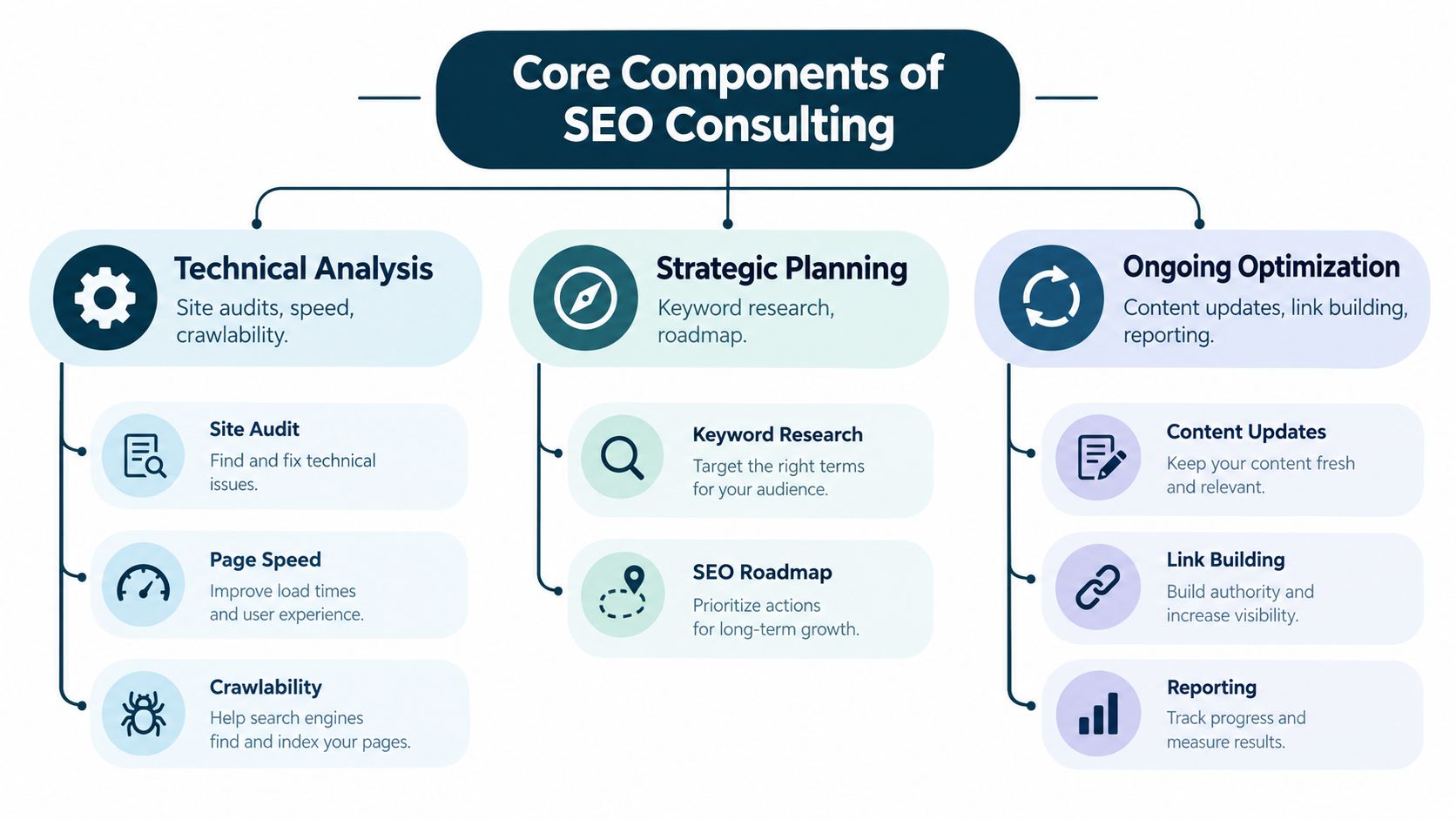
Strong consulting usually has three connected parts: technical analysis, strategic planning, and ongoing optimization. They overlap, but they shouldn't blur together. A technical audit finds constraints, strategy decides where to compete, and optimization turns the plan into an operating rhythm.
Technical analysis
A useful audit examines crawlability, indexation, site architecture, rendering, structured data, metadata, redirects, canonical tags, XML sitemaps, robots directives, and Core Web Vitals. It should identify the affected URLs, explain the likely cause, describe the risk, and specify the person or team responsible for the fix.
Core Web Vitals are part of Google's page experience evaluation. Commonly cited good thresholds are Largest Contentful Paint under 2.5 seconds, Interaction to Next Paint under 200 milliseconds, and Cumulative Layout Shift below 0.1, as summarized in this Core Web Vitals guide. Those measures are useful diagnostics, but performance alone won't make irrelevant or untrustworthy content competitive. Independent guidance treats Core Web Vitals as one ranking factor among many, rather than a substitute for relevance and authority.
Strategic planning
Keyword research should lead to decisions, not a spreadsheet full of phrases. A consultant maps search intent to pages, identifies gaps in the current site, studies competing results, and chooses opportunities that match your resources and commercial priorities.
For a SaaS company, that might mean separating educational searches from comparison and product-led searches. This SEO guidance for B2B SaaS is useful context for thinking about how site structure and content should support a longer buying journey.
Implementation and optimization
The deliverable may include revised page briefs, internal-link recommendations, technical tickets, content updates, outreach priorities, analytics requirements, and a reporting framework. A good consultant can advise your existing team without pretending that strategy and execution are the same job.
For a practical explanation of page-level work, see what on-page SEO optimization involves. The key test is simple: could a developer, writer, or marketer take the recommendation and know what to do next?
Pricing Models and What They Really Mean
SEO consulting pricing becomes clearer when you separate access to expertise from volume of deliverables. Before comparing SEO services prices, decide whether you need a specialist to make better decisions or a team to complete defined tasks. An hourly engagement can suit a focused technical question. A project fits a migration, audit, or planning exercise. A retainer supports regular prioritization and implementation guidance.
| Model | Typical Range | Best For | What You Get |
|---|---|---|---|
| Hourly consulting | Varies by specialist and scope | A defined question or short advisory need | Meetings, review, diagnosis, and recommendations |
| Project-based | Varies by site complexity and deliverables | Audits, migrations, rebuild planning, or strategy | A defined scope, roadmap, documentation, and handoff |
| Monthly retainer | Varies by access, market, and ongoing work | Businesses with continuing optimization needs | Recurring analysis, prioritization, reporting, and guidance |
| Performance-based | Requires careful contract design | Situations with reliable tracking and shared risk | Compensation tied to agreed measures, with clear exclusions |
One industry summary reports average small-business SEO spending of $497.16 per month, a median ROI of 748%, and 68.7% of clicks going to the first three organic listings, as reported in this SEO market and pricing summary. Treat these figures as market context, not a budget recommendation or promised outcome. The more useful question is whether the consultant can explain which decisions, tests, and implementation steps the fee covers.
What changes the price
A small brochure website with clear ownership and a narrow market requires a different engagement from a large store, a multilingual site, or a business preparing for a redesign. The price also changes according to the consultant's role. Advising on an AI-era search strategy requires judgment about priorities, content quality, intent, and measurement. Producing briefs, reviewing releases, joining implementation meetings, or coordinating teams requires additional working time.
Ask for these details before signing:
- Defined deliverables: State which documents, meetings, reviews, and recommendations you will receive.
- Implementation boundaries: Confirm whether development, writing, outreach, analytics configuration, and QA are included.
- Reporting logic: Require reports that connect work to visibility and business actions, rather than decorative ranking charts.
- Exit conditions: Clarify what happens when the project ends and who owns the documentation.
A low fee can become expensive if your team spends months implementing low-priority work or repairing risky tactics. A clear, limited engagement often creates more value than a long activity list, because it makes accountability and decision quality easier to assess.
Benefits That Go Beyond Higher Rankings
A ranking report can look healthy while sales remain flat. SEO consulting creates value when it improves the journey from a search to a useful page, a credible brand impression, and a sensible next action.
A local service company may need clearer service-area pages, stronger location signals, accurate business information, and conversion paths that make calling or requesting an estimate straightforward. An ecommerce business may need better category architecture, complete product information, filters that avoid indexation problems, and analytics that distinguish research visits from buying visits. A professional services firm may need content that answers difficult questions while making its expertise and offer easier to understand.
The business value of better decisions
Technical improvements can affect customer experience as well as search visibility. Faster pages are easier to use. A cleaner architecture helps visitors find relevant services. More accurate metadata sets expectations before the click. A focused content plan prevents writers from producing pages that have no clear audience, purpose, or connection to the buying process.
The broader case for why SEO matters for businesses is practical: connect each major recommendation to a business question. Are you trying to attract a new type of buyer, support an existing sales process, reduce dependence on paid acquisition, or clarify a confusing offer? The answer should determine priorities, page types, measurement, and implementation order.
Search visibility in the AI era
Modern consulting must account for Google AI Overviews and other answer engines. A page can appear in an AI-generated response without receiving the same click it might have earned as a traditional result. A growing share of agencies now tracks visibility in AI-generated answers, which changes how consultants assess content, entities, citations, and brand presence.
Traffic still matters. It now sits beside assisted conversions, branded demand, entity strength, qualified enquiries, and presence across answer engines. A consultant should help define which signals matter for your business, how they will be monitored, and what decision each one supports. That framework is more useful than collecting impressions without knowing whether they reflect qualified demand.
Rankings answer one question. The better question is whether the right people understood, trusted, and acted on what they found.
Common Misconceptions About SEO Consulting
SEO myths survive because they turn a complicated operating discipline into a simple purchase. “Add more content,” “get to page one,” and “make the site faster” sound actionable, but each statement leaves out the judgment that determines whether the work helps.

Myth one, SEO is a one-time project
An audit can be completed once. The decisions it produces still need implementation, validation, and revision. Competitors publish, products change, websites get redesigned, and search systems evolve. Treating SEO as a one-time checkbox leaves no process for deciding what happens after the first batch of fixes.
Myth two, more content automatically creates growth
More pages can create more opportunities, but they can also spread a limited budget across topics that don't fit the audience. A smaller set of well-positioned pages may be more useful than a large archive of similar articles. Before commissioning content, check the search intent, page purpose, internal links, subject coverage, and conversion path.
Writers and marketers also need workable tools. If your team is comparing platforms for managing long-form projects, this comparison of Novelcrafter and a cloud-based writing platform offers a useful reminder that workflow choices should match the team's actual needs, not just a feature list.
Myth three, rankings equal success
A ranking report can show visibility while hiding weak commercial relevance. Track qualified organic visits, enquiries, sales-assisted journeys, branded searches, and engagement with important pages. The right measures depend on the business model, but the principle stays constant: a ranking matters because of what it helps people do.
Myth four, speed fixes everything
Google's Search Quality Rater Guidelines describe human raters who use documented guidance to represent real users. That reinforces a practical truth. Technical quality matters, but useful content, trust, clarity, and satisfying the visitor's purpose still matter too.
This video provides another accessible way to think about SEO myths and expectations:
A consultant who guarantees a specific ranking is offering certainty they don't control. Look for a provider willing to discuss constraints, dependencies, measurement, and the difference between an improvement in visibility and an improvement in business performance.
How to Choose the Right SEO Consulting Partner
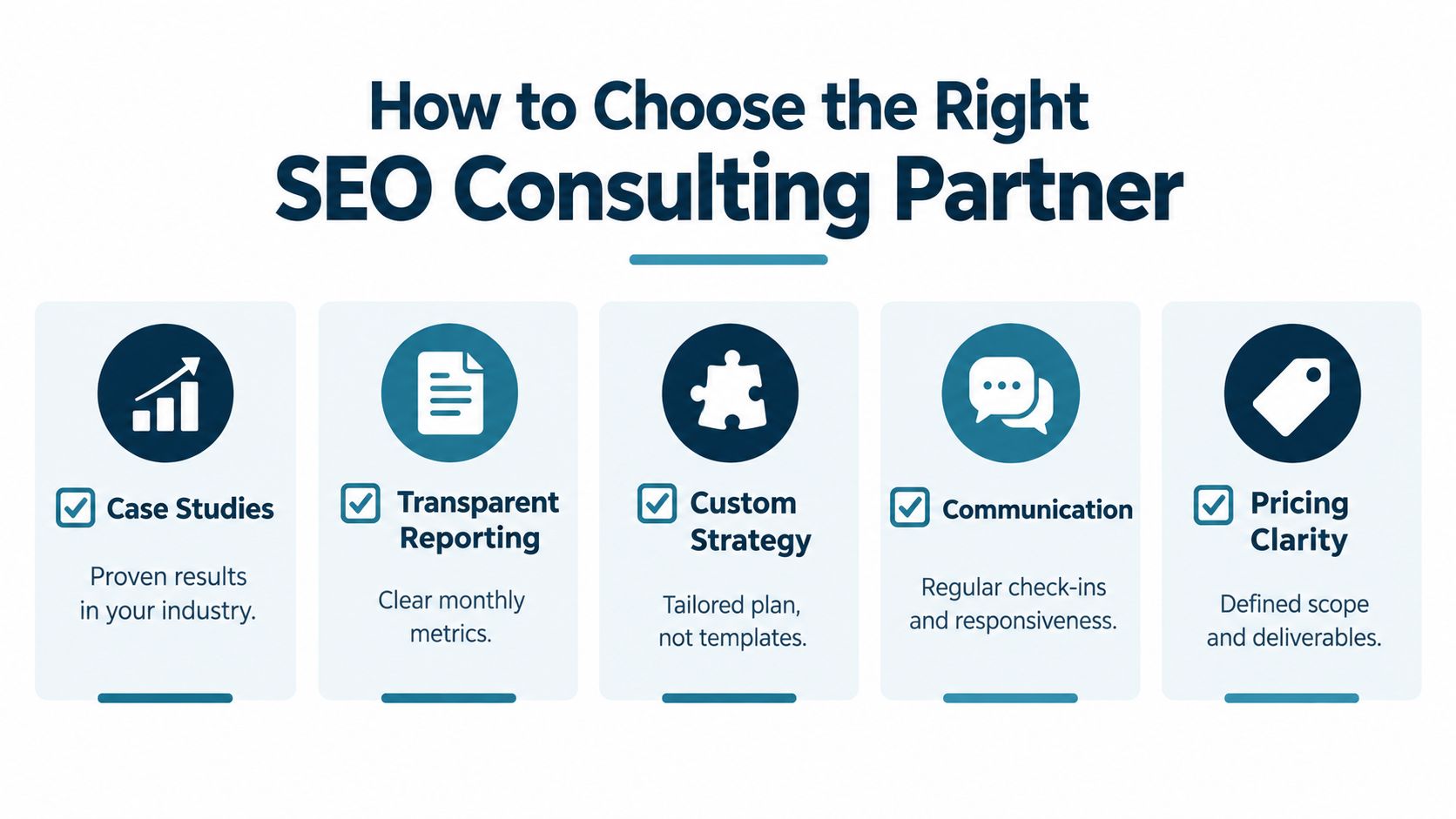
Choose a consultant by testing the quality of their thinking before you test the polish of their proposal. Ask them to explain the likely problems on your site, the evidence they need, the order of operations, and how your team will implement the recommendations.
Five checks before you sign
- Relevant experience: Ask for examples of comparable site types, business models, migrations, or technical problems. You don't need an identical client, but you do need evidence that the consultant understands your constraints.
- A custom strategy: Reject plans that could be sent unchanged to any business. Your audience, technology, sales cycle, content resources, and risk tolerance should shape the priorities.
- Transparent reporting: Reports should show completed work, open issues, visibility trends, qualified actions, and decisions for the next period. Ask to see a sample before agreeing.
- Implementation fluency: Recommendations should translate into tickets, briefs, acceptance criteria, and QA checks. If a consultant can't explain how a fix gets released, the plan may remain theoretical.
- Clear communication: Establish who attends meetings, how questions are handled, how often priorities change, and what happens when your internal team lacks capacity.
The guide to choosing an SEO agency can help you turn those checks into a shortlist and a focused set of interview questions.
Before work begins, document a baseline. Record the important pages, current conversion actions, known technical issues, analytics setup, and the business outcomes you care about. Avoid promises about a particular position or timeline. A sound partner can explain what they control, what depends on your team, and what evidence will justify changing direction.
If your website needs both search strategy and dependable technical support, Bruce and Eddy offers SEO audits, local visibility and analytics work, website development, and ongoing maintenance for organizations that need recommendations carried through into the website itself. Visit Bruce and Eddy to discuss where a practical SEO roadmap could fit your current website and team.
